
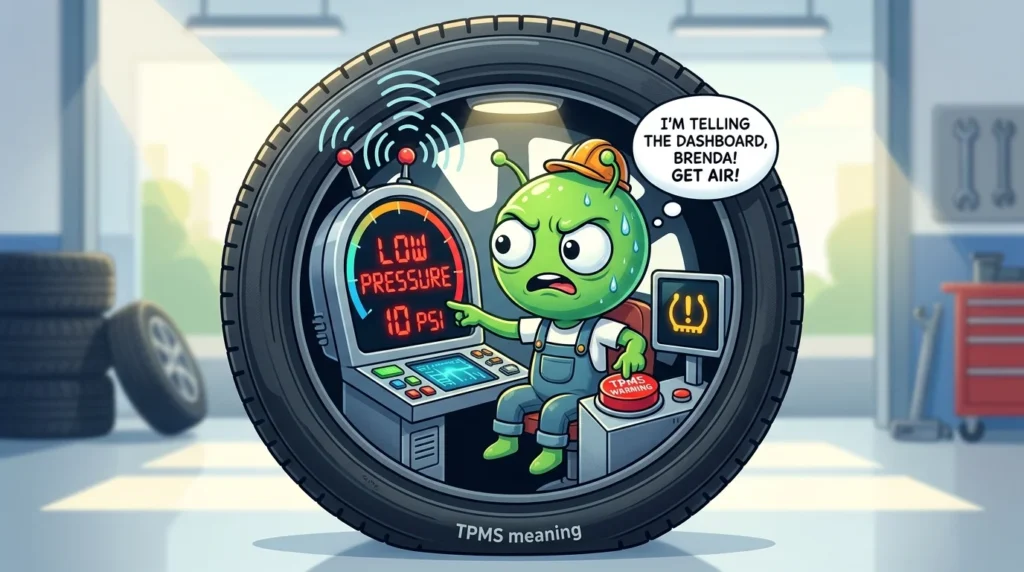
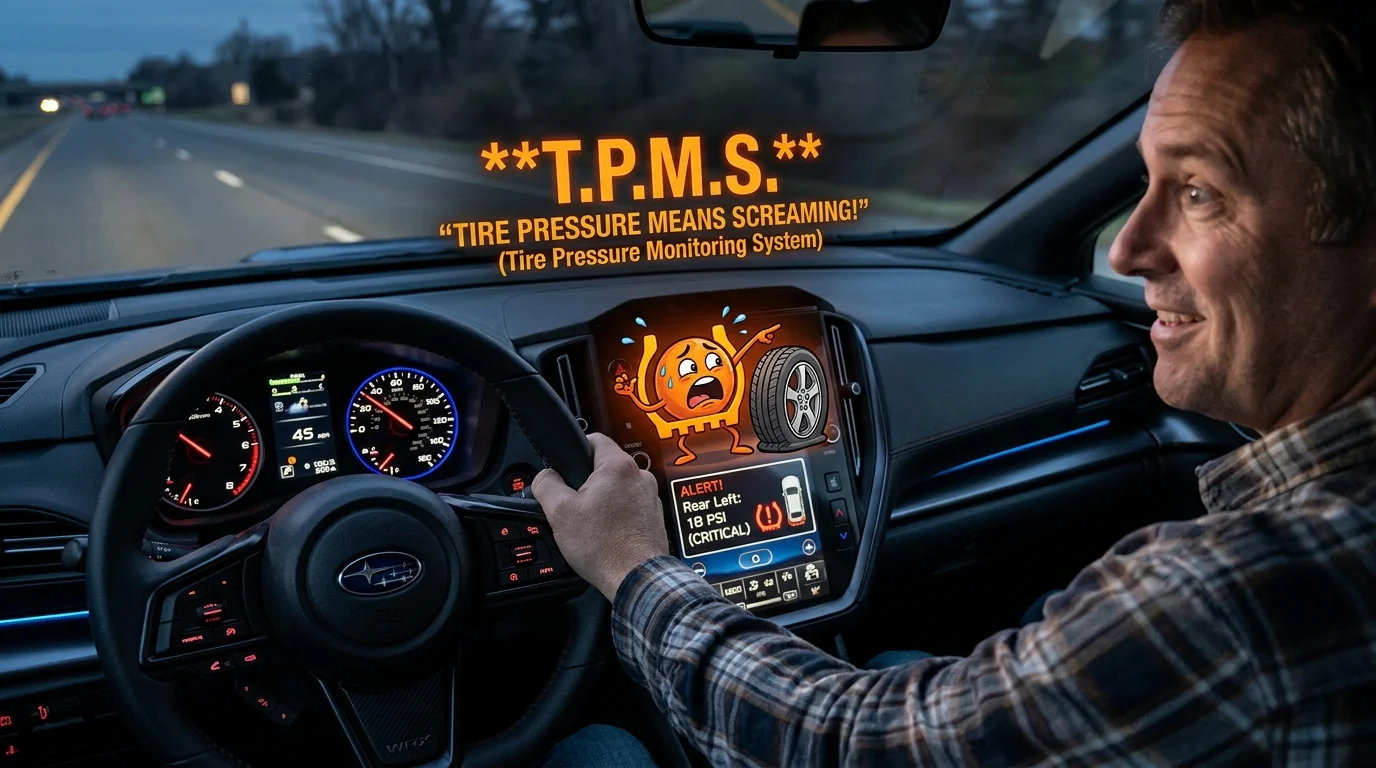
What Does TPMS Meaning?
The abbreviation TPMS stands for:
- Tire Pressure Monitoring System
This built-in vehicle safety feature monitors tire air pressure and warns drivers if one or more tires are underinflated.
Most modern vehicles include TPMS as a standard safety system.
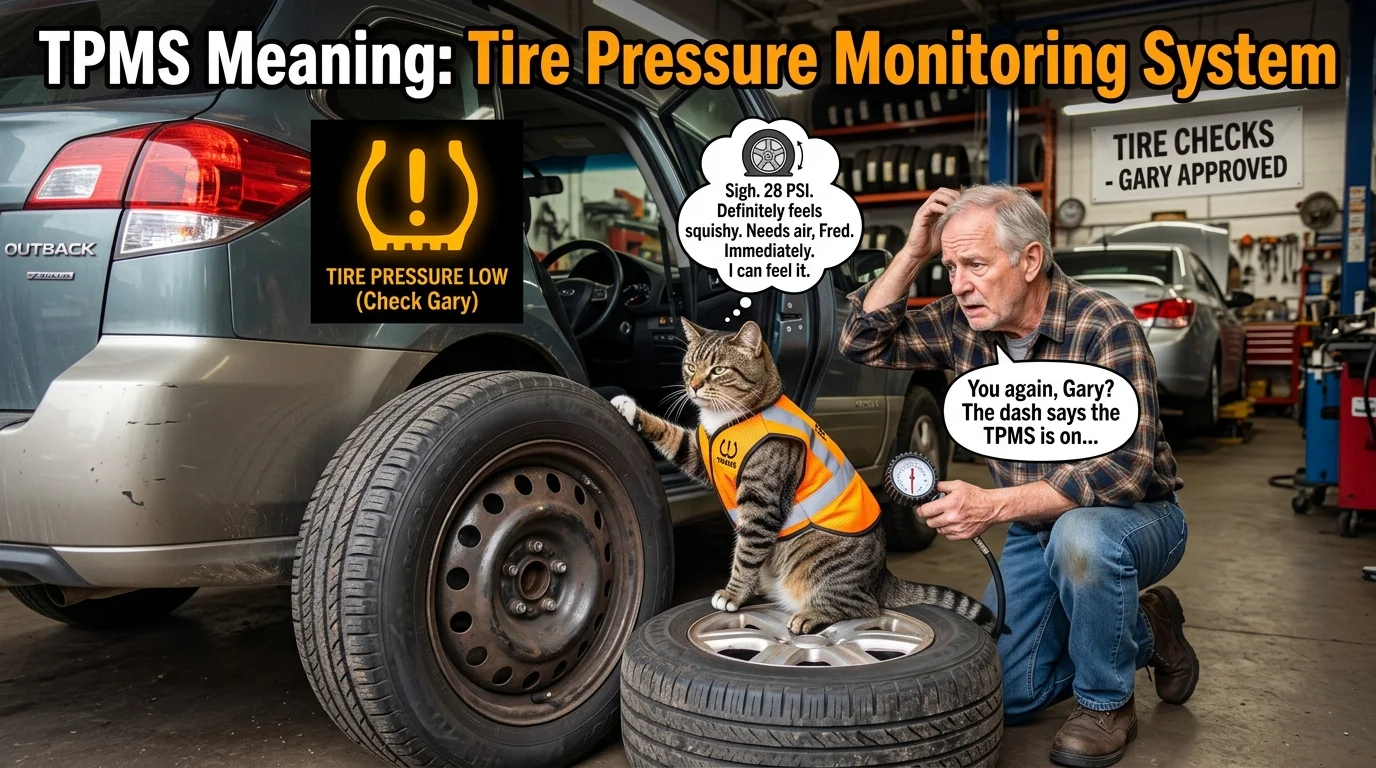
What Does the TPMS Warning Light Look Like?
The TPMS warning light usually looks like:
- A horseshoe-shaped tire symbol
- An exclamation mark inside the symbol
Some vehicles may also display:
- “TPMS”
- “Low Tire Pressure”
- Individual tire pressure readings
When this light appears, it usually means at least one tire needs attention.
How Does TPMS Work?
The Tire Pressure Monitoring System uses sensors to monitor tire pressure continuously.
There are two main types of TPMS:
Direct TPMS
Direct TPMS uses sensors inside each tire to measure actual air pressure.
Benefits include:
- More accurate readings
- Real-time pressure monitoring
- Faster warnings
Indirect TPMS
Indirect TPMS works through wheel speed sensors connected to the ABS system.
Instead of measuring pressure directly, it detects changes in tire rotation caused by low pressure.
Why Is TPMS Important?
Proper tire pressure affects many areas of vehicle safety and performance.
Correct tire pressure helps:
- Improve fuel economy
- Extend tire lifespan
- Improve braking performance
- Increase driving stability
- Reduce accident risk
Driving with low tire pressure can become dangerous, especially at high speeds.
Common Causes of a TPMS Warning Light
Several issues may trigger the TPMS light.
Low Tire Pressure
This is the most common cause.
Tires naturally lose air over time or during temperature changes.
Sudden Temperature Changes
Cold weather often lowers tire pressure.
Drivers commonly notice TPMS lights during winter mornings.
Tire Damage or Leaks
Punctures, nail damage, or slow leaks may trigger the warning.
Faulty TPMS Sensor
Sometimes the system itself may have a malfunctioning sensor or low sensor battery.
Tire Rotation or Replacement
After installing new tires or rotating tires, the TPMS system may need resetting.
Is It Safe to Drive With the TPMS Light On?
It depends on the situation.
If Tire Pressure Is Slightly Low
You may be able to drive carefully to a nearby gas station or tire shop.
If the Tire Looks Flat
Do not continue driving.
Driving on severely underinflated tires can:
- Damage tires permanently
- Reduce steering control
- Increase blowout risk
Always inspect tires when the warning appears.
How to Fix a TPMS Warning Light
1. Check Tire Pressure
Use a tire pressure gauge to inspect all tires.
The correct PSI is usually listed:
- Inside the driver’s door
- In the owner’s manual
2. Inflate Tires Properly
Add air until each tire reaches the recommended pressure level.
3. Reset the TPMS System
Some vehicles automatically reset after driving.
Others may require:
- A reset button
- Dashboard settings adjustment
- Professional service
4. Inspect for Damage
If the light stays on, check for:
- Leaks
- Punctures
- Sensor issues
A mechanic may need to inspect the system.
TPMS Light Flashing vs Solid Light
Solid TPMS Light
Usually indicates low tire pressure.
Flashing TPMS Light
Often means:
- Sensor malfunction
- System error
- Communication issue
A flashing light may require professional diagnosis.
How Often Should Tire Pressure Be Checked?
Experts recommend checking tire pressure:
- At least once a month
- Before long trips
- During seasonal weather changes
Proper maintenance improves safety and tire performance.
Benefits of Proper Tire Pressure
Maintaining correct tire pressure helps:
- Save fuel
- Improve handling
- Reduce tire wear
- Increase safety
- Improve braking response
Small maintenance habits can prevent expensive repairs later.
Common TPMS Misunderstandings
TPMS Does Not Replace Regular Inspections
Even with TPMS, drivers should still:
- Visually inspect tires
- Check tread wear
- Monitor tire condition
TPMS Only Monitors Pressure
Most systems do not monitor:
- Tire tread condition
- Alignment
- Tire age
Regular maintenance is still important.
Practical Driving Safety Tips
To maintain safe tires:
- Check tire pressure monthly
- Rotate tires regularly
- Replace damaged tires quickly
- Avoid overinflation
- Monitor dashboard warnings
Safe driving starts with proper vehicle maintenance.
Staying Calm When Warning Lights Appear
Dashboard warning lights can feel stressful, but staying calm helps you respond wisely.
Practical steps include:
- Pull over safely if needed
- Inspect tires carefully
- Avoid panic
- Seek professional help when necessary
Responsible driving protects both you and others on the road.