
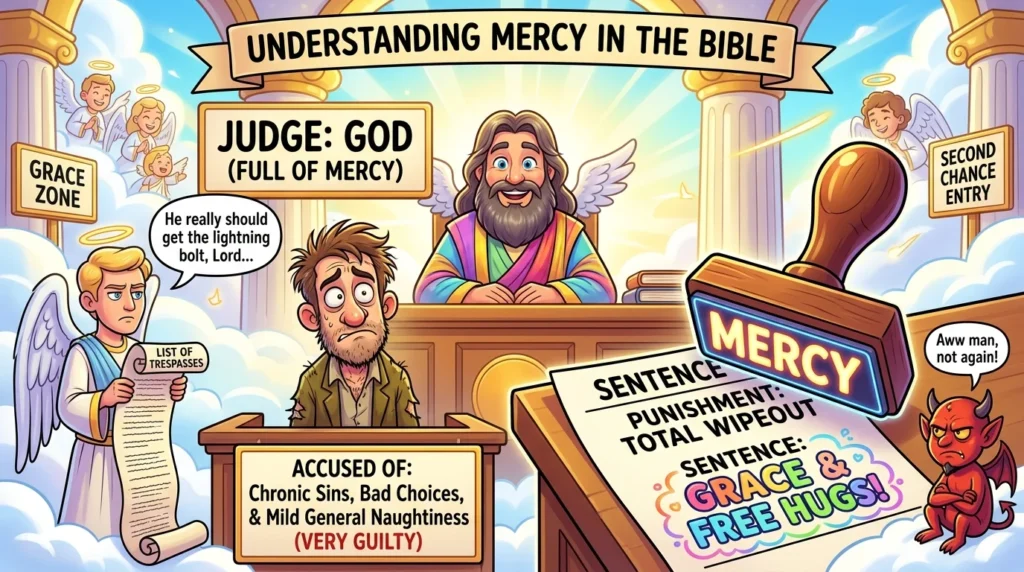
Many believers seek understanding mercy in the Bible because mercy is one of the most important themes throughout Scripture. From Genesis to Revelation, God reveals Himself as loving, compassionate, patient, and full of mercy toward humanity.
In simple terms, mercy means:
- Compassion shown to someone suffering
- Forgiveness instead of punishment
- Kindness toward those in need
What Does Mercy Mean in the Bible?
Biblically, mercy refers to:
- Compassion toward the weak or suffering
- Forgiveness instead of deserved judgment
- Loving kindness from God
Mercy reflects God’s heart toward humanity.
“The Lord is gracious and compassionate, slow to anger and rich in love.” — Psalm 145:8
God’s mercy is often connected with:
- Forgiveness
- Patience
- Healing
- Restoration
Mercy in the Old Testament
The Old Testament frequently describes God as merciful even when people failed Him.
Exodus 34:6
“The Lord, the compassionate and gracious God, slow to anger, abounding in love and faithfulness.”
This verse reveals:
- God’s patience
- His willingness to forgive
- His deep compassion for His people
Psalm 103:8–12
These verses explain how God removes sin and shows mercy instead of condemnation.
Key themes:
- Forgiveness
- Compassion
- Fatherly love
Mercy in the New Testament
In the New Testament, mercy becomes even more visible through Jesus Christ.
Jesus showed mercy by:
- Healing the sick
- Forgiving sinners
- Helping the poor and rejected
- Offering salvation
Jesus and Mercy
The Good Samaritan (Luke 10:25–37)
This parable teaches:
- Mercy requires action
- Compassion should cross social boundaries
- Loving others reflects God’s character
Jesus Forgives the Woman Caught in Sin
“Neither do I condemn you… Go and sin no more.” — John 8:11
This moment demonstrates:
- Mercy without approving sin
- Grace combined with truth
- Opportunity for transformation
Difference Between Mercy and Grace
People often confuse mercy and grace, but they are different.
| Mercy | Grace |
|---|---|
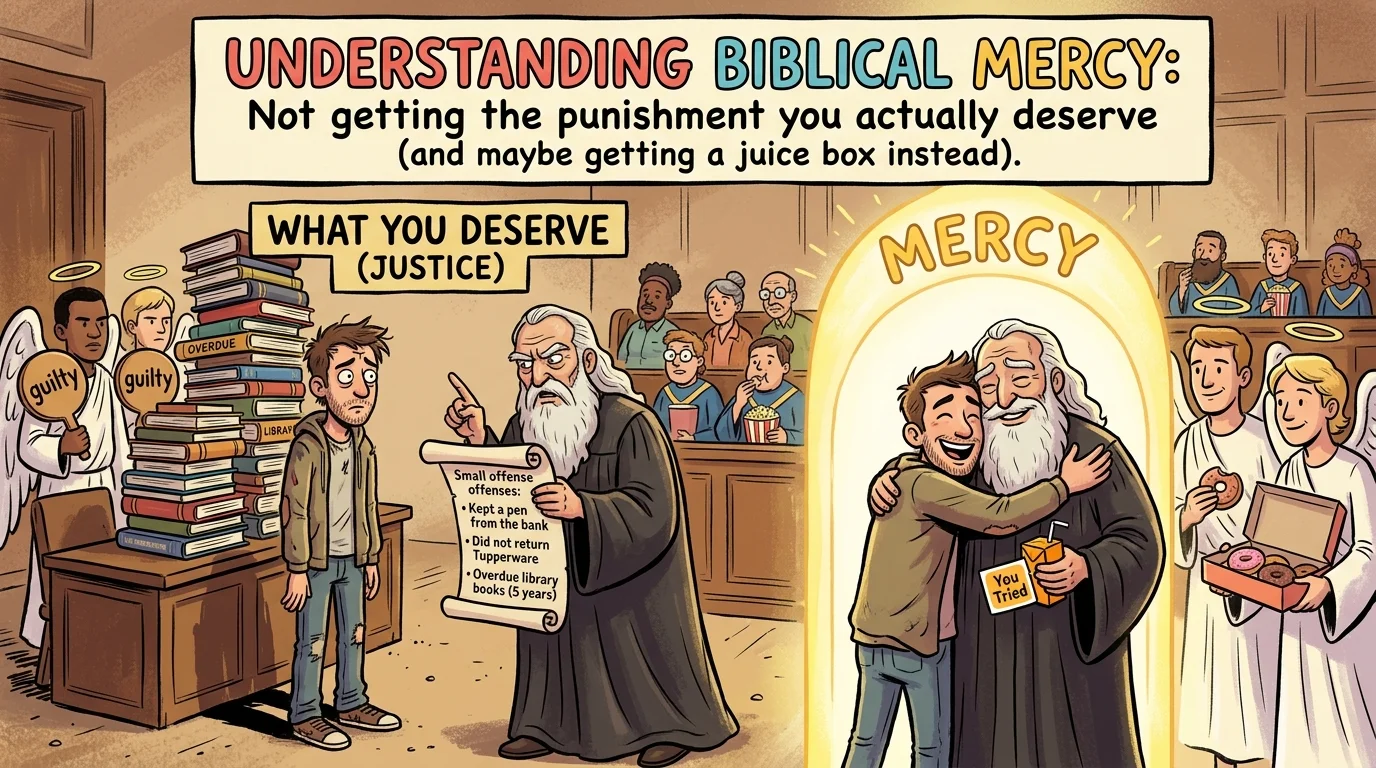
| Not receiving deserved punishment | Receiving undeserved blessing |
| Compassion and forgiveness | Favor and gift from God |
| God withholds judgment | God gives blessing |
Both reflect God’s love.
Spiritual Meaning of Understanding Mercy in the Bible
1. God’s Compassion for Humanity
Mercy shows that God understands:
- Human weakness
- Pain and suffering
- Spiritual struggles
2. Forgiveness and Restoration
Mercy allows people to:
- Repent
- Be forgiven
- Start again spiritually
“His mercies are new every morning.” — Lamentations 3:22–23
3. Mercy Reflects God’s Character
The Bible repeatedly teaches that mercy is central to who God is.

4. Christians Are Called to Show Mercy
Jesus taught believers to:
- Forgive others
- Help those in need
- Be compassionate
“Blessed are the merciful, for they will be shown mercy.” — Matthew 5:7
Examples of Mercy in the Bible
The Prodigal Son
The father welcomes his lost son back with compassion and forgiveness.
David Receiving Mercy
Even after serious sin, David found forgiveness through repentance.
Jesus Healing the Blind
Many people cried out:
“Lord, have mercy on us!”
Jesus responded with compassion and healing.
How Christians Can Practice Mercy
Forgive Others
Mercy includes letting go of bitterness and resentment.
Help Those in Need
Show compassion through:
- Generosity
- Encouragement
- Support for struggling people
Be Patient with Others
Mercy involves understanding human weakness.
Pray for a Merciful Heart
Ask God to help you reflect His compassion.
Why Mercy Matters Spiritually
Mercy:
- Strengthens relationships
- Reflects Christ’s character
- Promotes peace and healing
- Draws people closer to God
Without mercy, faith can become cold and judgmental.
Faith-Based Guidance for Living Mercifully
Spend Time in Prayer
A compassionate heart grows through closeness to God.
Read Scripture Regularly
The Bible teaches mercy through God’s actions and commands.
Remember God’s Mercy Toward You
Recognizing personal forgiveness helps believers forgive others.
Seek Humility
Mercy grows in humble hearts.
Conclusion
Understanding mercy in the Bible reveals the heart of God—compassionate, forgiving, patient, and loving toward humanity. Throughout Scripture, mercy is shown through God’s willingness to forgive, restore, and guide people despite their failures.
